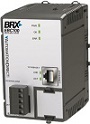
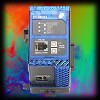
H2-EBC,   H2-EBC-F,   H2-EBC100,   H4-EBC,   H4-EBC-F,   T1H-EBC,   T1H-EBC100 Updated: 08/13/2008
Specification Firmware Documentation NetEdit3 FAQs
Our EBC and EBC100 (Ethernet Base Controller) interface modules provide a low-cost, high performance link to the I/O in your control system. There is a 10Base-T version for networks using UTP cable, a 10Base-FL version for fiber optic networks, and our new H2-EBC100 and T1H-EBC100 that support both 10Base-T and 100Base-T UTP networks.
  • You can use the EBCs as the I/O interface for PC-based control software such as Entivity's Think'nDo products, and Visual Logic Controller, and Wonderware's InControl. You can also use them with an OPC server like the KEPDirect EBC I/O Server from AutomationDirect.

  • The EBCs can be used with our H2-ERM and H4-ERM (Ethernet Remote Master) as the slave interface modules in remote I/O systems for the WinPLCs, the DL205 and DL405 CPUs.

  • Another popular option is using our free Ethernet SDK (Software Developers Kit) to develop a custom driver for Visual C/C++ or Visual Basic. If you want to build a driver for a non-Windows system, such as Linux or Solaris, you can request the source code for the Ethernet SDK.

  H2-EBC H2-EBC-F H2-EBC100 H4-EBC H4-EBC-F T1H-EBC T1H-EBC100
Ethernet
Connection
 RJ-45 ST-Style
Fiber Optic
820nm 1,2
RJ-45 RJ-45 ST-Style
Fiber Optic
820nm 1,2
RJ-45 RJ-45
Communications 10Base-T 10Base-FL 10/100Base-T 10Base-T 10Base-FL 10Base-T 10/100Base-T
Ethernet Protocols IPX
UDP/IP
IPX
UDP/IP
Modbus/TCP
DHCP
HTML
IPX
UDP/IP
IPX
UDP/IP
Modbus/TCP
DHCP
HTML
Serial Port 3 RJ-12
Serial Port
Protocols
KSequence
ASCII
KSequence
ASCII
MODBUS-RTU
KSequence
ASCII
KSequence
ASCII
MODBUS-RTU
Power Consumption
( 5vDC )
450mA 640mA 300mA 530mA 700mA 350mA 300mA
Power Supplied N/A N/A N/A 3470 @ 5vDC
400mA @ 24vDC
3300 @ 5vDC
400mA @ 24vDC
N/A N/A
Max Expansion Bases N/A N/A N/A 3 3 2 2
Max Discrete I/O 4 256 256 256 1280 1280 256 256
Max Analog I/O 5  64 64 64 512 512 256 256
Max Cable Length 100 meters
(328 ft)
2000 meters
(6560 ft)
100 meters
(328 ft)
100 meters
(328 ft)
2000 meters
(6560 ft)
100 meters
(328 ft)
100 meters
(328 ft)
Update Rate less than 2 ms per base 1 ms 6 1 ms 6
I/O modules supported All existing analog
and discrete modules
All existing analog and discrete modules and the D4-HSC All existing analog
and discrete modules
Operating Environment 0 ºC - 55 ºC (32 ºF – 131 ºF)
5% to 95% humidity (non-condensing)
no corrosive gases, pollution level=2
Vibration: MIL STD 810C 514.2
Shock: MIL STD 810C 516.2
Storage Temperature -20 ºC – 70 ºC  (-4 ºF – 158 ºF)
Manufacturer Host Automation Products, LLC.
Notes 1  For 62.5 / 125 multimode cable

Fiber Optic Transmitter: HFBR-1414 (820nm)
   Fiber Optic Receiver: HFBR-2416 (820nm)

3  The serial port is not enabled if the EBC or EBC100 is used with an Ethernet Remote Master module

4  H2-EBC  with  8 - 32 pt modules
   H4-EBC  with  8 - 64 pt modules and 24 - 32 pt modules
   T1H-EBC with 16 - 16 pt modules

5  H2-EBC  with  8 -  8 ch modules
   H4-EBC  with 32 - 16 ch modules
   T1H-EBC with 16 - 16 ch modules

6  each  8 channel analog output module adds 1 ms
   each 16 channel analog output module adds 1.5ms
   each T1H-CTRIO adds .7ms

Firmware


Upgrading the firmware in all of our EBCs is done through our free Ethernet Module Configuration utility NetEdit3. If you don't already have a copy of the utility, you can use this link to download NetEdit3 from our web site.

Once you have NetEdit3 installed on your PC, use the File->Live Update feature to download the latest version of the firmware files from the Host Engineering website. Follow the instructions in NetEdit3 to perform the actual update.


H2-EBC  &  H2-EBC-F
Last Update   : 4 June 2008
F/W Version   : v2.1.446
Boot Version  : v3.0.154
View the H2-EBC Revision History


H2-EBC100
Last Update   : 31 January 2012
F/W Version   : v4.0.544
Boot Version  : v4.0.165
View the H2-EBC100 Revision History


H4-EBC & H4-EBC-F
Last Update   : 24 August 2006
F/W Version   : v2.1.338
Boot Version   : v3.0.154
View the H4-EBC Revision History


T1H-EBC
Last Update   : 24 August 2006
F/W Version   : v1.0.470
Boot Version  : v3.0.154
View the T1H-EBC Revision History


T1H-EBC100
Last Update   : 31 January 2012
F/W Version   : v4.0.1338
Boot Version  : v4.0.165
View the T1H-EBC100 Revision History


Documentation

Use these following links to view the user manuals for these products. 

Product Advisories

NOTE: you will need the Adobe Acrobat Reader to view the files (available at Adobe Acrobat Free Reader ).

FAQs
 
EBC/EBC100 FAQs
(Last Update: 11-Feb-2011, EBC FAQ0086)

EBC FAQ0001
28-May-2002
Q: Can I add remote I/O connections to my EBC rack?
A: No. Instead you should use multiple EBCs for the same effect.


EBC FAQ0002
10-Jul-2002
Q: Does EBC support Modbus TCP?
A: The EBC models do not (H2-EBC; H4-EBC; T1H-EBC), but the EBC100 models do (H2-EBC100; T1H-EBC100)


EBC FAQ0003 (see also ERM FAQ0001)
11-Jul-2002
Q: ERM Workbench is not reporting errors when the analog output cards in the EBC rack are missing +24Vdc supply.
A: Facts Engineering (the designer of the analog cards) says that the cards themselves do not report errors regarding the absence of their +24Vdc supply. Therefore the EBC doesn't see them, and subsequently neither does the ERM or the Workbench software.


EBC FAQ0004 (see also NetEdit FAQ0011; ECOM FAQ0034; EDRV FAQ0008; ERM FAQ0024; PBC FAQ0015)
30-Mar-2010
Q: Getting various errors when attempting to update the booter/firmware for my EBCs, ECOMs, EDRVs and ERMs.
A: First make sure you isolate the device from all other tasks (i.e. put the PLC in the STOP mode; stop HMI; isolate from busy network traffic). Secondly, make sure you are using the latest version of NetEdit3 which can be downloaded for free here:
http://www.hosteng.com/SW-Products/NetEdit3.zip

Here are some common problems experienced:

  • (1) After Rescanning, the booter/firmware version doesn't change - NetEdit is probably getting an error that is not getting reported. Upgrade to the latest NetEdit (i.e. >v3.4). If this doesn't work then report the error to us and we can send you ETHER32.EXE which should do it.
     
  • (2) "Error booting to booter" - You are probably using the old ETHER32.EXE utility. It is much easier to utilize the latest NetEdit3 to accomplish updates. It has a fully integrated firmware/booter update facility as well as "live update" feature to retrieve the latest firmware/booter files from our website.
     
  • (3) "Error! Error 32774 from DownloadBinFile!" - This error 32774 is sometimes indicated as "Error 0x8006" and simply is a general timeout message. This simply means that NetEdit3 cannot talk to the device in a consistent manner (i.e. uninterrupted). Some things that can cause this:

    -  The network could be too busy, therefore isolate this device and try again.
    -  The WinXP firewall could be turned on. If so you must do one of the following:
         (1) Turn the firewall off, or
         (2) Create an exception for NetEdit3.EXE application, or
         (3) Create an exception for port #0x7070 (28784) for both TCP and UDP protocols. which is the port number that all of our Ethernet devices use for communication.
     
  • (4) "Error 216" - This error means there were severe problems with either writing the firmware to the device, or verifying what was written. Usually if you get this error, it leaves the device in the booter state (i.e. the red ERR light is flashing). In most cases all that is needed is to make sure you isolate the device from all other tasks (as mentioned above), and try the update again.

EBC FAQ0005
06-Jan-2003
Q: When attempting to update the firmware for an H2-EBC, get "Error 206 - Open file error."
A: This error is displayed when the program can't find the name of the .bin file that was entered on the command line. This is usually due to typing in the name of the .bin file incorrectly. Correct the filename, or . .  

Download the ERM Workbench software and use it to update the booter and firmware of the EBC.


EBC FAQ0006 (see also NetEdit FAQ0003, ERM FAQ0003, EDRIVE FAQ0004)
09-Sep-2009
Q: NetEdit sees ERM, EBC and EDRV, but ERM Workbench gets error "ERM not found" when trying to write the configuration to the ERM.
A: Downloading the latest version of ERM Workbench may remedy this problem; especially if you are using the ERM Workbench Wizard. You should download at least ERM Workbench v1.1 Build 26. Otherwise here are some things to try:

  • Make sure NWLink IPX protocol is loaded for your PC's NIC (see EBC FAQ0057 for installing protocols).
  • Make sure NWLink IPX protocol is disabled (unchecked) for any other network connections other than the one you will be using.
  • Make sure your PC's NIC is not "Bridged" but only "Enabled." (My Network Places --> Properties).
  • Make sure you have no other "Bridged" connections "Enabled" in your list of LAN Connections. (My Network Places --> Properties).
  • Make sure you only have a single LAN Connection and not multiple connections. (My Network Places --> Properties).
  • Make sure your Internal Network Number is set to "00000000." (My Network Places --> Properties --> LAN Connection --> Properties --> General tab --> NWLink IPX protocol --> Propterties button).
  • Make sure you have "QoS packet tagging" disabled. (My Computer --> Properties --> Hardware tab --> Device Manager button --> Network adapters --> (your NIC's name) --> Properties --> Advanced tab --> 802.1p QOS).

EBC FAQ0007 (see also ERM FAQ0004)
07-Jan-2003
Q: Can an EBC's (hooked to an ERM) serial port be used for HMI devices?
A: No, ERM doesn't support serial-port comm on the EBC. ERM100 & EBC100's will have serial port support, however.


EBC FAQ0008 (see also DL Plus FAQ0001)
14-Jan-2003
Q: Can DL Plus software talk directly to EBCs?
A: DL Plus only allows Lookout to talk directly to ECOMs. However, since Lookout has an OPC Client, it could talk directly to KEPDirect EBC I/O Server software which talks directly to EBCs.


EBC FAQ0009
21-Jan-2003
Q: Is the KEPDirect software TCP/IP or UDP/IP?
A: UDP/IP, because the EBC only talks UDP/IP.


EBC FAQ0010 (see also ERM FAQ0005, WinPLC FAQ0001)
22-Jan-2003
Q: Does the WinPLC allow for an ERM?
A: Yes. The WinCE-only version can have up to 6 ERMs (due to power budget limitations) and each ERM supporting as many as 16 EBCs. However if the WinPLC you are using is a Think&Do version you are limited to only 1 ERM and that ERM can only have 1 EBC.


EBC FAQ0011 (see also ERM FAQ0006)
21-Jan-2003
Q: Have DL260 using 2 ERMs on 2 separate networks. Worked for a season. Now the second ERM fails if more than 2 EBCs are hooked to it.
A: Since the system worked good for a while, then something obviously changed. Check network hardware (like hubs).


EBC FAQ0012 (see also ERM FAQ0007, SDK FAQ0001)
29-Jan-2003
Q: How do you determine what state the outputs will go to if comm is lost on the EBC?
A: If using the SDK, this can be set with the subroutine HEIWriteSetupData. If using ERM WorkBench the watchdog has a timeout value and by default it is set to freeze outputs if comm is lost.. However, you can also set it to disable all outputs if watchdog fires.


EBC FAQ0013 (see also ERM FAQ0008)
11-Jun-2002
Q: Error codes for ERM and EBC are hard to understand and incomplete.
A: Error codes have been added to the ERM Workbench and the ERM manual with explanations of possible causes.


EBC FAQ0014 (see also CTRIO FAQ0012, PBC FAQ0004, WinPLC FAQ0003)
06-Feb-2003
Q: CTRIO Workbench indicates that the CTRIO module is in "Startup" mode and all of the configuration parameters are grayed out.
A: "Startup" mode indicates that CTRIO Workbench cannot successfully communicate with the CTRIO. The problem is not between CTRIO Workbench and the CPU, the problem is between the CPU and the CTRIO itself. Communication across the backplane is failing. Here are some known causes of this:

  • The CTRIO is in the slot adjacent to the CPU (slot 0) and you are using a D2-240, D2-250 or D2-260 CPU. You must move it to another slot.
  • You are using CTRIO Workbench v1.1 with a CTRIO that has firmware version 2.0.1 or later. Update your Workbench.
  • You are using CTRIO Workbench v1.1 and starting it from DirectSOFT. Either start it from DS Launch or upgrade CTRIO and CTRIO Workbench.
  • The PLC has old firmware. This Product Advisory details the revision levels required.
  • The PLC power is OFF.
  • You have a DL205 in a "-1" base (the ones that have the expansion I/O connector on the right side), and you have an H2-EBC, H2-WinPLC or H2-PBC that has not been modified to work in these new bases.
        H2-EBC less than 7F (7F and 8F work)
        H2-EBC-F less than 1F (1F works)
        H2-WPLC1, WPLC2 less than 4K (4K, 5K & 6K work)
        H2-WPLC3 less than 1K (1K works)
        H2-PBC less than 2D (2D works)

* - Revision meaning: "7F" means: "7" is bare board revision. "F" the revision of the assembly drawing that we are using to build the boards.

If you have older EBC, PBC or WinPLC hardware, you have two options to get them updated:

  1. RMA them back to Automation Direct (a part will be shipped immediately to you).
  2. Send them to Host Engineering (you will have to wait on the part to be modified and shipped back).

EBC FAQ0015 (see also HA-TADP FAQ0001; EDRIVE FAQ0001; ECOM FAQ0008; ERM FAQ0009; WinPLC FAQ0004; EZ Ethernet FAQ0011)
07-Feb-2003
Q: Can the MAC address be changed?
A: The MAC address is burned into the ROM of the device and is set just before it leaves the factory. There is no logical way for any protocol to change this address. Host Engineering’s range for Ethernet MAC addresses is 00.E0.62.xx.xx.xx.

However, there was a bug with the old Ether32.EXE program that could change the MAC Address! If you use Ether32.EXE to update the booter using TCP/IP protocol (i.e. use the "/pi" option on the command line), then the MAC Address could be changed by accident!

  • If MAC Address gets changed by accident in the above fashion, then you will have to ship the module(s) to Host Engineering for repair.
  • When updating the booter/firmware of the EBC, EDRV, ECOM or ERM always use NetEdit instead of the outdated Ether32.EXE.

EBC FAQ0016 (see also ERM FAQ0010; ECOM FAQ0009; EDRIVE FAQ0002)
12-Feb-2003
Q: Can ERM Workbench be used to upgrade firmware on other Host Ethernet devices (e.g. an ECOM)? And if so, how?
A: Yes.

  1. Open ERM Workbench
  2. Press the <ERM Workbench> button at bottom left (skip using Wizard)
  3. Press the <2. Select Slaves…> button at top right. 
  4. Window at left shows ERM devices, but there is a filter at the bottom: "All Devices." Pick this one. 
  5. Now all Host Ethernet devices are shown. Pick device of your choice and press <Upgrade Firmware...> button. Follow instructions.

EBC FAQ0017 (see also ERM FAQ0011)
19-Feb-2003
Q: What is the response time of an EBC?
A: This is a common question and has a very technical answer. It is also a bit ambiguous because in any system that utilizes an EBC there are several different asynchronous loops going on that contribute to overall delay (or response time). What follows are 14 formulas for calculating worse-case response time for all module types (Discrete IN, Discrete OUT, Analog IN, Analog OUT). Keep in mind, this is not a scan time that you are calculating, but rather a response time.

A scan time is generally a constant (like that of a PLC). Since there are several asynchronous things happening in any EBC system, there is no such thing as a constant scan time.

A response time calculation will, however, give you the worse-case time possible depending on whether you want to know:

  • ...the maximum time it takes from when the PLC writes an output value until when this value is seen in the real world, or...
  • ...the maximum time it takes from when the real world input changes until when the PLC sees the change.

Use the following table to figure out which FORMULAs to use for your particular application. Add the total time from each of the FORMULAs you must use, and you will have a worse-case response time.

  FORMULA
MASTER SLAVE I/O TYPE 1 2 3 4 5 6 7 8 9 10 11 12 13 14
PC H2-EBC Discrete I/O ü   ü ü                    
Analog IN ü   ü ü ü   ü              
Analog OUT ü   ü ü   ü ü              
H2-EBC100 Discrete I/O ü   ü             ü        
Analog IN ü   ü       ü     ü ü      
Analog OUT ü   ü       ü     ü   ü    
H4-EBC Discrete I/O ü   ü ü                    
Analog IN ü   ü ü ü   ü              
Analog OUT ü   ü ü   ü ü              
T1H-EBC Discrete I/O ü   ü           ü          
Analog IN ü   ü       ü   ü          
Analog OUT ü   ü       ü ü            
T1H-EBC100 Discrete I/O ü   ü                   ü  
Analog IN ü   ü       ü           ü  
Analog OUT ü   ü       ü             ü
ERM H2-EBC Discrete I/O   ü ü ü                    
Analog IN   ü ü ü ü   ü              
Analog OUT   ü ü ü   ü ü              
H2-EBC100 Discrete I/O   ü ü             ü        
Analog IN   ü ü       ü     ü ü      
Analog OUT   ü ü       ü     ü   ü    
H4-EBC Discrete I/O   ü ü ü                    
Analog IN   ü ü ü ü   ü              
Analog OUT   ü ü ü   ü ü              
T1H-EBC Discrete I/O   ü ü           ü          
Analog IN   ü ü       ü   ü          
Analog OUT   ü ü       ü ü            
T1H-EBC100 Discrete I/O   ü ü                   ü  
Analog IN   ü ü       ü           ü  
Analog OUT   ü ü       ü             ü

FORMULAs:
    
Time(1) = Scan time of application
     Time(2) = PLCScanTime x 4 (or 3)
     Time(3) = Microseconds
     Time(4) = 2ms x #ofEBCs
     Time(5) = 2ms x Total#ofAIChForBase
     Time(6) = 2ms x Total#ofAOChForBase
     Time(7) = Specified for particular module
                         For AI it is generally called "Data Acquisition Time"
                         For AO it is generally called "Conversion Setting Time"
     Time(8) = 1ms + (1ms x Total#of8ChAOModsForBase) + (1.5ms x Total#of16ChAOModsForBase)
     Time(9) = 1ms
     Time(10) = 1ms x #ofH2EBC100s
     Time(11) = 2ms + (0.5ms x #ofAIChsOfMod)
     Time(12) = 2ms + (0.5ms x #ofAOChsOfMod)
     Time(13) = 0.7ms
     Time(14) = 0.7ms + (0.7ms x Total#of8ChAOModsForBase) + (1ms x Total#of16ChAOModsForBase)


FORMULA DESCRIPTIONS

Time(1) = Scan time of application

If the controlling device is a PC, then the execution time of the application code must first be considered. In some applications this can be a considerable amount of time (in the millisecond range).


Time(2) = PLCScanTime x 4 (or 3)

If the controlling device is an H2-ERM or H4-ERM, then you must consider the scan time of the PLC. There are 4 data types the ERM has to process:

  1. Discrete inputs (bit ins)
  2. Discrete outputs (bit outs)
  3. Analog inputs (word ins)
  4. Analog outputs (word outs)

The DL PLCs can only process one type of data per PLC scan. There are always "bit ins, bit outs and word ins" simply because the ERM's error bits and status information are written and read even if there are no modules installed in the slaved EBC. But since the PLC only processes one type of data per PLC scan it takes at least 3 PLC scans (e.g. bit in, bit out, word in) to process the types. Of course if you have analog output modules (word outs) then it would take 4 PLC scans.


Time(3) = Microseconds

Next, the time on the Ethernet wire for the PC to talk to the EBC, or the ERM to talk to the EBC is negligible. At a transmission rate of 10 Mbps (or especially 100Mbps) there is really so little data (by comparison), that this time is not considered unless you have a non-isolated busy network.


Time(4) = 2ms x #ofEBCs

The H2-EBCs and H4-EBCs have an image registers that their masters (i.e. a PC or an ERM) talk to. It takes 2 ms to read or write data to these registers and get an acknowledgment back. Even when figuring response time (which is what we are doing), all the EBCs connected to the master are going to contribute to delay in getting a change to an output, or reading a change from an input in the EBC you are interested in simply because the master has to poll all the slaves in his list. And this takes time. Thus it takes 2 ms times the number of EBCs in the network that this particular master is talking to. When considering Discrete I/O, there is essentially no more delay added to this time.


Time(5) = 2ms x Total#ofAIChForBase

The H2-EBC and H4-EBCs are continually updating their image registers with the data from all analog input (AI) modules. Even though there are 4 data types the only ones that really have any affect on response time are the analogs (word in, word out). The maximum time it could take the EBC to read a new value from an analog input module is 2 ms per channel. But this delay is increased as more analog input channels are added to the base. The more analog input channels in the base, the slower the over all response of all analog input channels in the base. Please note that this has to do with the total number of analog input channels, not analog input modules.


Time(6) = 2ms x Total#ofAOChForBase

The H2-EBC and H4-EBCs are continually updating their analog output (AO) modules with the data from their image registers. Even though there are 4 data types the only ones that really have any affect on response time are the analogs (word in, word out). The maximum time it could take the EBC to write a new value to an analog output module is 2 ms per channel. But this delay is increased as more analog output channels are added to the base. The more analog output channels in the base, the slower the over all response of all analog output channels in the base. Please note that this has to do with the total number of analog output channels, not analog output modules.


Time(7) = Specified for particular module
                    For AI it is generally called "Data Acquisition Time"
                    For AO it is generally called "Conversion Setting Time"

The time it takes to see a change from a particular analog input channel until it actually shows up as data on the EBC bus is specified as the "Data Acquisition Time" of that particular module and can be found in its specs. Likewise the time it takes for the data on the bus to show up as a change in the output of the analog output channel is called "Conversion Setting Time" or sometimes just "Conversion Time" and can be found in its specs.


Time(8) = 1ms + (1ms x Total#of8ChAOModsForBase) + (1.5ms x Total#of16ChAOModsForBase)

The T1H-EBC has an image register that its master (i.e. a PC or an ERM) talks to. It normally takes 1 ms to read or write data to this register and get an acknowledgment back. However, unlike the H2-EBC or the H4-EBC it is not fixed. Instead it is so fast that whereas the H2-EBC and the H4-EBC delays divide up into a "read/write time" and an "analog in/analog out" time using formulas (4), (5) and (6) above, the T1H-EBC combines them into one thing; "read/write & analog). This 1 ms delay is increased slightly if you have analog outputs installed in the EBC. What happens is when a write is performed to an analog output in the EBC, the normal scan is interrupted and the EBC immediately writes the data to the analog output module. So for each 8-channel analog output module, you add an additional 1 ms of delay. For each 16-channel analog output module you add 1.5 ms. Reading analog inputs, however, is so fast it is negligible. Please note that this has to do with the total number of analog output modules in the base, not analog output channels (opposite of H2-EBC and H4-EBC).


Time(9) = 1ms

The T1H-EBC has an image register that its master (i.e. a PC or an ERM) talks to. It normally takes 1 ms to read or write data to this register and get an acknowledgment back. However, unlike the H2-EBC or the H4-EBC it is not fixed. Instead it is so fast that whereas the H2-EBC and the H4-EBC delays divide up into a "read/write time" and an "analog in/analog out" time using formulas (4), (5) and (6) above, the T1H-EBC combines them into one thing; "read/write & analog." This 1 ms delay is increased slightly if you have analog outputs installed in the EBC. However, when reading analog inputs, it is so fast it is negligible, so no additional time is added to the 1 ms as in formula (8) above.


Time(10) = 1ms x #ofH2EBC100s

Like the H2-EBCs and H4-EBCs, the H2-EBC100s have an image registers that their masters (i.e. a PC or an ERM) talk to. Because of the faster processor in the H2-EBC100 it only takes 1ms to read or write data to these registers and get an acknowledgment back. (i.e. the decrease in read/write time is not significantly improved by the 100Mbps VS the 10Mbps, but rather the faster processor in the H2-EBC100 itself). Even when figuring response time (which is what we are doing), all the H2-EBC100s connected to the master are going to contribute to delay in getting a change to an output, or reading a change from an input in the H2-EBC100 you are interested in simply because the master has to poll all the slaves in his list. And this takes time. Thus it takes 1 ms times the number of H2-EBC100s in the network that this particular master is talking to. When considering Discrete I/O, there is essentially no more delay added to this time.


Time(11) = 2ms + (0.5ms x #ofAIChsOfMod)

Like the H2-EBCs and H4-EBCs the H2-EBC100s are continually updating their image registers with the data from all analog input (AI) modules. Even though there are 4 data types the only ones that really have any affect on response time are the analogs (word in, word out). The maximum time it could take the H2-EBC100 to read a new value from an analog input module is 0.5 ms times the number of channels that particular analog input module has enabled plus an inherent delay of 2 ms for the module itself. Unlike the H2-EBC and H4-EBC analog input reads, this delay is not increased as more analog input channels are added to the base. In other words if more analog input channels are added to the base, this will not affect the over all response of any other analog input channels in the base. This essentially means that the newer H2-EBC100 is running each analog input module in its base in parallel with the others! Great feature, eh?


Time(12) = 2ms + (0.5ms x #ofAOChsOfMod)

Like the H2-EBCs and H4-EBCs the H2-EBC100s are continually updating their analog output (AO) modules with the data from their image registers. Even though there are 4 data types the only ones that really have any affect on response time are the analogs (word in, word out). The maximum time it could take the H2-EBC100 to write a new value to an analog output module is 0.5 ms times the number of channels that particular analog output module has enabled plus an inherent delay of 2 ms for the module itself. Unlike the H2-EBC and H4-EBC analog output writes, this delay is not increased as more analog output channels are added to the base. In other words if more analog output channels are added to the base, this will not affect the over all response of any other analog output channels in the base. This essentially means that the newer H2-EBC100 is running each analog output module in its base in parallel with the others! Great feature, eh?


Time(13) = 0.7ms

Like the T1H-EBC the T1H-EBC100 has an image register that its master (i.e. a PC or an ERM) talks to. It normally takes 0.7 ms to read or write data to this register and get an acknowledgment back. However, unlike the H2-EBC or the H4-EBC it is not fixed. Instead it is so fast that whereas the H2-EBC and the H4-EBC delays divide up into a "read/write time" and an "analog in/analog out" time using formulas (4), (5) and (6) above, the T1H-EBC100 combines them into one thing; "read/write & analog." This 0.7 ms delay is increased slightly if you have analog outputs installed in the EBC. However, when reading analog inputs, it is so fast it is negligible, so no additional time is added to the 0.7 ms as in formula (8) above.


Time(14) = 0.7ms + (0.7ms x Total#of8ChAOModsForBase) + (1ms x Total#of16ChAOModsForBase)

Like the T1H-EBC the T1H-EBC100 has an image register that its master (i.e. a PC or an ERM) talks to. It normally takes 0.7 ms to read or write data to this register and get an acknowledgment back. However, unlike the H2-EBC or the H4-EBC it is not fixed. Instead it is so fast that whereas the H2-EBC and the H4-EBC delays divide up into a "read/write time" and an "analog in/analog out" time using formulas (4), (5) and (6) above, the T1H-EBC100 combines them into one thing; "read/write & analog." This 0.7 ms delay is increased slightly if you have analog outputs installed in the T1H-EBC100. What happens is when a write is performed to an analog output in the T1H-EBC100, the normal scan is interrupted and the T1H-EBC100 immediately writes the data to the analog output module. So for each 8-channel analog output module, you add an additional 0.7 ms of delay. For each 16-channel analog output module you add 1 ms. Reading analog inputs, however, is so fast it is negligible. Please note that this has to do with the total number of analog output modules in the base, not analog output channels (opposite of H2-EBC and H4-EBC).

A Final Word

With the above 14 formulas you can calculate worse-case response times for as many pieces in your particular application as you desire. Of course statistics teach us that the typical time will generally be about half of worse case.


THREE EXAMPLES

(1) Using H2-ERM and H2-EBC

Lets say we have a PLC with a scan time of 20 ms, an H2-ERM, two H2-EBCs and the EBC we are interested in has one 8-channel analog output (F2-08DA-2), and one 8-channel analog input (F2-08AD-1). The network is isolated.

First let's calculate the response time from the PLC to a signal change on the analog output module. According to the above chart I would use FORMULAs 2, 3, 4, 6 & 7, thus:

Time(2) = PLCScanTime x 4 (or 3) = 20 x 4 = 80 ms (multiply by 4 because we have all 4 data types in the EBC base)
Time(3) = Microseconds = 0 ms (this is negligible)
Time(4) = 2ms x #ofEBCs = 2 x 2 = 4 ms (two EBCs on the network)
Time(6) = 2ms x Total#ofAOChForBase = 2 x 8 = 16 ms
Time(7) = "Conversion Setting Time" for AO = 9 ms (as specified for the F2-08DA-2)

Thus the response time from PLC to signal change on analog output = 80 + 0 + 4 + 16 + 9 = 109 ms (worse case)

Next let's calculate the response time from a change on the analog input signal to the PLC data. According to the above chart I would use FORMULAs 2, 3, 4, 5 & 7, thus:

Time(2) = PLCScanTime x 4 (or 3) = 20 x 4 = 80 ms (same as above)
Time(3) = Microseconds
= 0 ms (same as above)
Time(4) = 2ms x #ofEBCs
= 2 x 2 = 4 ms (same as above)
Time(5) = 2ms x Total#ofAIChForBase
= 2 x 8 = 16 ms
Time(7) = "Data Acquisition Time" for AI
= 3 ms/channel = 3 x 8 = 24 ms (as specified for the F2-08AD-1)

Thus the response time from signal change on analog input to PLC = 80 + 0 + 4 + 16 + 24 = 124 ms (worse case)
 

(2) Using H2-ERM and H2-EBC100

Lets try the same thing as above, only instead of H2-EBCs we replace them with H2-EBC100s.

First let's calculate the response time from the PLC to a signal change on the analog output module. According to the above chart I would use FORMULAs 2, 3, 7, 10 & 12 thus:

Time(2) = PLCScanTime x 4 (or 3) = 20 x 4 = 80 ms (multiply by 4 because we have all 4 data types in the EBC base)
Time(3) = Microseconds = 0 ms (this is negligible)
Time(7) = "Conversion Setting Time" for AO = 9 ms (as specified for the F2-08DA-2)
Time(10) = 1ms x #ofH2EBC100s = 1 x 2 = 2 ms (two EBC100s on the network)
Time(12) = 2ms + (0.5ms x #ofAOChsOfMod)
= 2 + (0.5 x 8) = 2 + 4 =
6 ms

Thus the response time from PLC to signal change on analog output = 80 + 0 + 9 + 2 + 6 = 97 ms (worse case)

Next let's calculate the response time from a change on the analog input signal to the PLC data. According to the above chart I would use FORMULAs 2, 3, 7, 10 & 11 thus:

Time(2) = PLCScanTime x 4 (or 3) = 20 x 4 = 80 ms (same as above)
Time(3) = Microseconds
= 0 ms (same as above)
Time(7) = "Data Acquisition Time" for AI
= 3 ms/channel = 3 x 8 = 24 ms (as specified for the F2-08AD-1)
Time(10) = 1ms x #ofH2EBC100s = 1 x 2 = 2 ms (same as above)
Time(11) = 2ms + (0.5ms x #ofAIChsOfMod)
= 2 + (0.5 x 8) = 2 + 4 =
6 ms

Thus the response time from signal change on analog input to PLC = 80 + 0 + 24 + 2 + 6 = 112 ms (worse case)

So you can see that replacing the H2-EBC with the H2-EBC100 improved the response time in both directions.

(3) Using H2-ERM and T1H-EBC

Lets say we have a PLC with a scan time of 20 ms, an H2-ERM, a T1H-EBC which has one 8-channel analog output (T1F-08DA-2), and two 8-channel analog inputs (T1F-08AD-1). The network is isolated.

First let's calculate the response time from the PLC to a signal change on the analog output module. According to the above chart I would use FORMULAs 2, 3, 7 & 8 thus:

Time(2) = PLCScanTime x 4 (or 3) = 20 x 4 = 80 ms (multiply by 4 because we have all 4 data types in the EBC base)
Time(3) = Microseconds = 0 ms (this is negligible)
Time(7) = "Conversion Setting Time" for AO = 0.1 ms (as specified for the T1F-08DA-2)
Time(8) = 1ms + (1ms x Total#of8ChAOModsForBase) + (1.5ms x Total#of16ChAOModsForBase) = 1 + (1 x 1) + (1.5 x 0) = 1 + 1 + 0 =
2 ms

Thus the response time from PLC to signal change on analog output = 80 + 0 + 0.1 + 2 = 82.1 ms (worse case)

Next let's calculate the response time from a change on the analog input signal to the PLC data. According to the above chart I would use FORMULAs 2, 3, 7 & thus:

Time(2) = PLCScanTime x 4 (or 3) = 20 x 4 = 80 ms (same as above)
Time(3) = Microseconds
= 0 ms (same as above)
Time(7) = "Data Acquisition Time" for AI
= 5 ms/channel = 5 x 8 = 40 ms (as specified for the T1F-08AD-1)
Time(9) = 1ms

Thus the response time from signal change on analog input to PLC = 80 + 0 + 40 + 1 = 121 ms (worse case)


EBC FAQ0018
27-Feb-2003
Q: Will Wonderware's 205/405 EBC driver work with the T1H-EBC?
A: No. Their original driver will not work with the T1H-EBC. Must have an updated driver for this to work. Check with Wonderware to see if they have updated their driver to support T1H-EBC.


EBC FAQ0019
27-Feb-2003
Q: T1H-EBC shows up in NetEdit with a Name and Description as "???EBC" but in ERM Workbench it is "Term EBC."
A: The default Name and Description for the T1H-EBC is "???EBC," but this can be changed with NetEdit.


EBC FAQ0020
26-Feb-2003
Q: Need to update the booter/firmware for EBC. Where can I obtain the latest booter/firmware files?
A: This is done automatically using the Live Update feature of NetEdit3.

  1. You must have an Internet connection.
  2. Download NetEdit3 and install (Support --> Utilities; scroll down to NetEdit3 section); download the .ZIP file and install.
  3. Execute NetEdit3.
  4. In NetEdit3:  File --> Live Update; then press the <GO> button.

The latest booter/firmware files (.BIN) are then loaded onto your PC in the HAPTools\Images folders. Now you can use NetEdit3 to update your booter/firmware.

  1. Connect your PC to the EBC's network and press <Scan Network> button in NetEdit3.
  2. Right-click on your EBC and select "Update booter..." or "Update firmware"

EBC FAQ0021
28-Feb-2003
Q: Can I use Wonderware's InControl software to control a DirectLogic rack of I/O?
A: Yes. Wonderware makes a driver that will talk directly to our H2-EBC and H4-EBC. You will have to go to the Wonderware website and search for it (http://www.wonderware.com) or call them and order it.


EBC FAQ0022 (see also ERM FAQ0012)
06-Mar-2003
Q: Is there any advantage of using a switch over a hub with ERM/EBC network?
A: Since the ERM/EBC network is supposed to be dedicated, then the answer is "no."

However, if the ERM/EBC are on a network that has other devices (not advisable!) then of course, one may prove to be more advantageous given the scenario. A hub blindly repeats data that it hears on one port to all of its ports. Therefore only one Ethernet node connected to it can talk at a time. A switch, however, evaluates the source and destination of the Ethernet packet and can therefore learn paths. This allows many Ethernet nodes to talk to one another over private connections simultaneously through the switch. A switch would probably work out better if the ERM/EBC are on a regular office PC network (again, not advisable!)


EBC FAQ0023 (see also ERM FAQ0014; ECOM FAQ0019; EDRIVE FAQ0005; EZ Ethernet FAQ0014)
26-Mar-2003
Q: For my Ethernet network that would exceed 100 meters, is a standard hub considered a repeater so as to increase the permissible length?
A: Yes. The maximum distance per 10BaseT cable segment is 100 meters. Repeaters (e.g. hubs, bridges, etc.) extend the distance. Each cable segment attached to a repeater can be 100 meters. Thus, two repeaters can gain you a total of 300 meters distance.


EBC FAQ0024 (see also ERM FAQ0017; WinPLC FAQ0005)
22-Apr-2003
Q: How many EBCs can one ERM support?
A: Normally 16. But if the CPU is a Think&Do WinPLC then this is limited to 1 (this limitation does not apply to the WinCE-only version of the WinPLC).


EBC FAQ0025
10-Sep-2002
Q: When using H4-EBC base configuration, what is the difference between F4-08THM vs F4-08THM Unipolar?
A: Normally the F4-08THM is used with bipolar thermocouples and returns a 2's compliment value temperature in the range of -32768 to +32767. However, if unipolar thermocouples are used with the F4-08THM module and it is set up as such, then it returns a temperature in the range of 0 to 65535. So, it is necessary for the EBC to know this so that it will know when and when not to convert the value to 2's compliment.


EBC FAQ0026
13-Sep-2002
Q: When attempting to update the firmware for an T1H-EBC, the LINK GOOD and ERROR lights come on.
A: If no lights come on before seeing the LINK GOOD and then the ERROR light comes on, then it could be a hardware problem (return for repair) or it could be that the firmware is corrupt.<INCOMPLETE><INCOMPLETE>


EBC FAQ0027
13-Sep-2002
Q: When attempting to update the firmware for an T1H-EBC, the ERROR lights flashes.
A: If the ERROR light is flashing this could indicate an error code by the number of times it flashes before a pause:

BLINKS MEANING REMEDY
Rapid blinking Operating System (OS) OK, modules removed Check modules
2 No Operating System (OS) found Load firmware
3 Ethernet initialization problem If problem is persistent over power cycling, send in for repair
4 Invalid boot version Upgrade booter to match what firmware requires

EBC FAQ0028 (see also SERIO FAQ0001; WinPLC FAQ0012)
09-Sep-2002
Q: Are there slot restrictions for the SERIO module?
A: There is no slot restriction for the H2-SERIO module.


EBC FAQ0029 (see also CTRIO FAQ0034; ERM FAQ0019)
30-Sep-2003
Q: Will the CTRIO work in the local expansion bases of DL205 or DL405 line?
A: No. Do not install the H4-CTRIO nor the H2-CTRIO in local expansion. It will however work in the ERM/EBC configuration. So you can expand the I/O using the ERM/EBC instead.


EBC FAQ0030 (see also WinPLC FAQ0013, CTRIO FAQ0014)
11-Feb-2003
Q: What is the expected hit on the scan time for adding an H2-CTRIO to WinPLC or EBC rack? When I connect with Entivity and add more than one H2-CTRIO I get a timeout.
A: This is different for each product:

For WinPLC, there could be a detectable hit (however, small) simply because it has a comparatively slower processor (100MHz).

On the EBC itself, the addition of a CTRIO will probably not be noticeable at all simply because the EBC has only one thing to do . . . update its I/O.

On a Think&Do or Entivity application there will be about 7ms/CTRIO hit due to the number of tags that are created to handle the extra I/O scanning of the CTRIO from the PC. Thus, in the Connectivity Center of this software, under "Attributes" you must increase the "Timeout Value for Retries(ms)" value accordingly.


EBC FAQ0031
19-Sep-2002
Q: After attempting to upgrade the booter now my T1H-EBC will not work at all.
A: The booter is definitely critical when it is being updated. In older versions if it was corrupted during the update, there was no way to recover and the EBC would just have to be sent back to Host Engineering to be fixed! With the latest booter (at least v3.0.102) you can now recover from this fatal state if trying to update later versions. However, if your EBC will now no longer function (won't accept booter nor firmware) then it must be shipped to Host Engineering for repair. The latest booter is always included in the firmware download ZIP file on our website.


EBC FAQ0032
19-Sep-2002
Q: Unable to see any of the THM, RTD or 08AD-1 modules in H2-EBC, H4-EBC and T1H-EBCs.
A: This is due to the THM, RTD and 08AD-1 modules powering up with the broken-transmitter bits turned on (before they are actually checked). We compensated the problem in our latest firmware for all EBCs. Must have at least EBC firmware v2.1.296.


EBC FAQ0033 (see also ECOM 0028; ERM FAQ0020, EDRV FAQ0007, EZ Ethernet FAQ0017; DirectSOFT FAQ0181; DS Data FAQ0088; SDK FAQ0012; NetEdit FAQ0013)
20-Nov-2003
Q: What Ethernet protocols are used by your products?
A: Refer to chart below:

Product Ethernet Protocols
UDP/IP IPX TCP/IP Raw Ethernet Broadcast (1)
K-seq DirectNet ECOM (2) Koyo Backplane User Defined Data Proprietary (1) K-seq DirectNet ECOM (2) Proprietary (1) Modbus TCP Master Modbus TCP Slave Proprietary (1) Koyo Backplane
Hardware ECOM ü ü ü ü (3) ü (4)   ü ü ü         ü (5)
ECOM100 ü ü ü ü (3) ü (4)   ü ü ü   ü (6) ü   ü (5)
EBC           ü       ü        
EBC100           ü       ü   ü    
ERM           ü (7)       ü (7) (8)      
EDRV           ü       ü   ü (12)    
EZ Ethernet ü ü ü       ü ü ü          
EZ EtherPLUS ü ü ü       ü ü ü   ü      
WinPLC                         ü  
Software DirectSOFT ü ü ü       ü ü ü          
DS Data ü ü ü       ü ü ü          
Ethernet SDK ü (9) ü       ü ü (9) ü   ü        
NetEdit ü (10)         ü (11) ü (10)     ü (11)        

(1)  Not an industry standard. However, protocol is available for 3rd-party development upon request.
(2)  Not really a distinct protocol. This setting is used to intelligently pick K-sequence or DirectNet as needed by the hardware/software.
(3)  Used when doing ECOM-to-ECOM via RX/WX instructions with RX/WX Node Map configured in sending ECOM.
(4)  Used when doing ECOM-to-PC (Report-by-Exception) via RX/WX instructions (Address 90 only) with ECOM's dipswitch 7 set ON.
(5)  Used when doing ECOM-to-ECOM via RX/WX instructions without RX/WX Node Map configured in sending ECOM.
(6)  RX/WX Node Map must be configured in ECOM.
(7)  ERM can talk to one slave with UDP/IP and another with IPX simultaneously.
(8)  Planned for Dec2004-Feb2005.
(9)  Requires K-sequence protocol spec (request from Automation Direct)
(10)  Uses K-sequence to perform "Test CPU Access!" function.
(11)  Uses this protocol to perform "Show Base Contents..." function.
(12)  The older HA-EDRV2 cannot talk Modbus TCP.


EBC FAQ0034 (see also ERM FAQ0021, WinPLC FAQ0014)
05-Feb-2008
Q: After writing configuration to ERM and EBC get "Error 228 - Backplane error."
A: Error 228 is defined as "Backplane read/write request queue full" and it means that for some reason the CPU is either rejecting requests from its ERM or not accepting them. Common causes:

  • Bad backplane (local base).
  • Bent pins on ERM (if using H4-ERM), or CPU.
  • H2-ERM installed in Slot 0 (slot next to the DL205 CPU).
  • Power budget in the local base is being exceeded (lack of sufficient power).
  • CPU memory scrambled: Try (1) Clear PLC memory (all); (2) Program END instruction; (3) Put CPU in RUN; (4) Power-cycle entire system.

EBC FAQ0035
05-Dec-2003
Q: Do you make or recommend any wireless Ethernet devices that could be used with or actually replace the EBC?
A: No, but if you bought standard wireless Ethernet switches/hubs, the EBC should work with those. However, you may have to increase the timeout and retry values due to the wireless configuration.


EBC FAQ0036 (see also NetEdit FAQ0008)
26-Sep-2002
Q: Using NetEdit to configure an H4-EBC, but the F4-16DA-2 is not listed as an option to put in the slots.
A: You can choose one of two things:

  1. Download a later version of NetEdit from our website.
  2. Configure it using the F4-16DA-1 instead. It has the same "signature" as the F4-16DA-2 and it will work just fine.

EBC FAQ0037
27-Sep-2002
Q: The EBC ERR light comes on when Think&Do is in the RUN mode, but not when it is in the I/O View.
A: This is due to the increase in the scan time in the RUN mode. The I/O View scan time is much quicker than the RUN mode. Therefore you must use Think&Do to increase the EBC timeouts and perhaps even the Retries value as well.


EBC FAQ0038 (see also CTRIO FAQ0039; PBC FAQ0006)
27-Aug-2002
Q: In order to use the newer T1H-CTRIO or H4-CTRIO, what are the requirements as far as configuration software, hardware and firmware?
A: Here are the requirements:

  • CTRIO Workbench needs to be at least v2.1.2.
  • T1H-CTRIO firmware needs to be at least v2.1.2.
  • H4-CTRIO firmware needs to be at least v2.1.2.
  • If using T1H-CTRIO in T1H-EBC the T1H-EBC hardware needs to be at least "2I" and firmware v1.0.444.
  • If using T1H-CTRIO in T1H-PBC the T1H-PBC hardware needs to be at least "2D" and firmware v1.1.10.
  • If using H4-CTRIO in H4-EBC the H4-EBC hardware needs to be at least "4F" and firmware v2.1.328.
  • If using H4-CTRIO in D4-450 the D4-450 needs to be at least T1.985.

EBC FAQ0039 (see also ERM FAQ0022)
08-Oct-2002
Q: Using H4-ERM to H4-EBC. Does this configuration support the use of D4-EX local I/O expansion modules off of the H4-EBC?
A: Yes. The H4-ERM can have up to 16 H4-EBC slaves. On each H4-EBC it is possible to utilize the D4-EX local I/O expansion to attach 3 more 405 bases. Thus that is 16 x 4 = 64 total 405 bases of I/O attached to one ERM!


EBC FAQ0040 (see also ERM FAQ0023)
08-Oct-2002
Q: Using H2-ERM to H2-EBC. Does this configuration support the use of D2-EM/CM local I/O expansion modules off of the H2-EBC?
A: No. H2-EBC does not support the local I/O expansion of the DL250-1/260 variety. But the solution is to just use another H2-EBC instead of using the D2-EM/CM pair.


EBC FAQ0041 (see also PBC FAQ0007; WinPLC FAQ0015)
09-Oct-2002
Q: Which H2-EBC, H2-PBC and H2-WPLC work in the newer DL205 "-1" bases?
A: The following states the hardware revision requirements for using these products in the newer DL205 "-1" bases (the ones that have the local expansion I/O connector on the right side):

  • H2-EBC must be at least 7F (7F and 8F work).
  • H2-PBC must be at least 2D (2D works).
  • H2-WPLC1 must be at least 4K (4K, 5K & 6K work).
  • H2-WPLC2 must be at least 4K (4K, 5K & 6K work).
  • H2-WPLC3 must be at least 1K (1K works).

Find the hardware revision number on a label on the right side of the PCB (printed circuit board) as shown:


EBC FAQ0042 (see also ERM FAQ0025; SDK FAQ0006)
07-Oct-2002
Q: My EBC outputs sometimes go OFF intermittently; at the same time the Error light on the EBC comes on.
A: When the Error light comes ON, this indicates that the watchdog circuit in the EBC has fired. By default the EBC's watchdog is set to 250ms. This means that if the EBC doesn't get a communication from its master (e.g. ERM; Entivity; Ethernet SDK app; KEPDirect; etc.) within 250ms then it will fire. When the watchdog fires the outputs in the EBC base will all be switched OFF for safety purposes. The watchdog time can be set via the master configuration software (e.g. ERM Workbench; Entivity; etc.). It can also be disabled. If the watchdog is disabled then the outputs in the EBC base will simply freeze to their last state before the watchdog fired.

Thus in the case above where the outputs appear to go OFF intermittently, this is probably due to the watchdog time being too small for the application scan time. So either disable the watchdog totally (NOT RECOMMENDED FOR SAFETY REASONS), or adjust the time to a higher value.


EBC FAQ0043 (see also CTRIO FAQ0043; PBC FAQ0008)
11-Oct-2002
Q: How many T1H-CTRIOs can be installed in one base?
A: For T1H-EBC, 13. For T1H-PBC, 2. The limit is data budget.


EBC FAQ0044
14-Oct-2002
Q: Using the local expansion I/O from an H4-EBC. Is there a bit in the EBC that indicates when the local expansion I/O has been disconnected?
A: No. Either:

  • Use another EBC, or...
  • Wire an input high on the expansion base, and monitor it independently from the PLC.

EBC FAQ0045
21-Oct-2002
Q: How many modules can be installed in the T1H-EBC?
A: The limit is 16 modules (digital and/or analog). However, in the past we have found that there are certain apparently random combinations of 16 modules that do not function properly. When this occurs usually the T1H-EBC is unable to see the module(s) at the end of the configuration. So far we have not been able to nail down exactly the rhyme or reason behind such failures but we are sure it has to do with backplane impedance. Fortunately this is a very rare thing. If this happens with your configuration, try a few of the following suggestions:

  • Change the order of the modules.
  • Install in-line power supplies as necessary for power budget.
  • Uninstall in-line power supplies if they are not needed.
  • Uninstall local I/O expansion cables if possible and put all modules in a straight line.

EBC FAQ0046 (see also ERM FAQ0029)
25-Oct-2002
Q: Can an EBC support an ERM in its base?
A: No. The only things that can support ERMs are a regular DL PLC or a WinPLC.


EBC FAQ0047 (see also CTRIO FAQ0046; ECOM FAQ0036; EDRV FAQ0009; ERM FAQ0030; EZ Ethernet FAQ0018; PBC FAQ0009; PSCM FAQ0001; WinPLC FAQ0018; NetEdit FAQ0014)
07-Nov-2002
Q: What software tool do I use to upgrade/downgrade my Host Engineering hardware?
A: Refer to the following:

Host Hardware Part Number Firmware/Booter Upgrade Tool
CTRIO H0-CTRIO
H2-CTRIO
H4-CTRIO
CTRIO Workbench
EBC
EBC100
H2-EBC
H4-EBC
T1H-EBC
NetEdit3
T1H-EBC100 NetEdit3 (v3.4 or higher)
H2-EBC100 NetEdit3 (v3.5 or higher)
ECOM
ECOM100
H0-ECOM
H2-ECOM
H4-ECOM
NetEdit3
H0-ECOM100
H2-ECOM100
H4-ECOM100
NetEdit3 (v3.5 or higher)
EDRV EDRV NetEdit3
ERM H2-ERM
H4-ERM
NetEdit3 or ERM Workbench
EZ Ethernet EZ Ethernet
EZ EtherPLUS
EZ Touch
PBC H2-PBC NetEdit3
PSCM H0-PSCM
H2-PSCM
WinPLC WinPLC WinPLC Workbench

NOTE: All the firmware for the above products can be downloaded using NetEdit3's File --> Live Update... The firmware files are stored in c:\HAPTools\Images folder.


EBC FAQ0048 (see also CTRIO FAQ0013; ERM FAQ0031; WinPLC FAQ0029; SDK FAQ0013)
22-Nov-2002
Q: Is it possible to utilize the CTRIO System Functions everywhere it can be installed?
A: In firmware v2.x System Functions were added to the CTRIO products (H0-, H2-, H4- and T1H-CTRIO). These System Functions would allow you to write (and read) various internal registers of the CTRIO. The following table shows what scenarios that these System Functions can be used and how to use them:

  System Function CTRIO Configuration
Local DL PLC Base Remote DL PLC Base DL PLC with ERM/EBC WinPLC (Think&Do) Local Base WinPLC (Think&Do) with ERM/EBC Think&Do (Entivity) to EBC Ethernet SDK to EBC
Mapped System Functions (i.e. in V-memory) Status of Inputs YES NO (4) YES YES YES YES YES
Mode & Status of Outputs YES NO (4) YES YES YES YES YES
CTRIO Shared RAM System Functions 0x01 - Read all registers YES (1) NO (4) NO (5) YES (2) YES (2) YES (2) YES (3)
0x02 - Write all registers YES (1) NO (4) NO (5) YES (2) YES (2) YES (2) YES (3)
0x04 - Write one register YES (1) NO (4) NO (5) YES (2) YES (2) YES (2) YES (3)
0x05 - Write reset value YES (1) NO (4) NO (5) YES (2) YES (2) YES (2) YES (3)

(1) - Use RD/WT instruction in Ladders.
(2) - Use Shared RAM Operations for CTRIO in a CALL block.
(3) - Use Ethernet SDK routine HEIWriteSharedRAM / HEIReadSharedRAM.
(4) - Not possible because CTRIO will not work in remote bases.
(5) - Not possible because Ladders cannot tell the ERM to access the Shared RAM of CTRIO in EBC base.


EBC FAQ0049 (see also CTRIO FAQ0055)
10-Mar-2003
Q:  Are there any slot restrictions for the CTRIO if installed in an EBC?
A: The following restrictions apply:

  • If using H2-EBC with a hardware revision less than 9A, you can install H2-CTRIO in all slots except Slot 0 (the one adjacent to the EBC itself).
  • If using H2-EBC with a hardware revision of 9A or greater, there are no slot restrictions.
  • If using H4-EBC there are no slot restrictions.
  • If using T1H-EBC there are no slot restrictions.

EBC FAQ0050 (see also SDK FAQ0010)
14-Apr-2003
Q: Using the Ethernet SDK's EBCDemo.EXE but getting "????" for analog module F2-08DA-2 installed in H2-EBC.
A: This is because the EBCDemo.EXE was created before the F2-08DA-2 module was created; so it doesn't know exactly what it is. Also make sure you have at least H2-EBC firmware version v2.1.128 to support this newer analog module.


EBC FAQ0051 (see also SDK FAQ0008)
03-Dec-2002
Q: Using the T1F-14THM thermocouple module; how do I convert the returned hexadecimal value into a decimal temperature?
A: The EBC that the T1F-14THM module is plugged into has already converted it to a temperature in the Visual Basic data type called "long." But, if you want to convert a hexadecimal to a decimal number you would use something like:

Val(string)

Where string is a hexadecimal number like "&H10FA."


EBC FAQ0052 (see also DS Data FAQ0087; DirectSOFT FAQ0180; NetEdit FAQ0012; ECOM FAQ0040; EDRV FAQ0010; ERM FAQ0034; EZ Ethernet FAQ0026)
27-Apr-2004
Q: Getting various errors when attempting to use NetEdit to see or establish a link to a Host Ethernet device.
A: Here are know errors and their suggested solutions:

CAUTION: You may want to consult your Network Administrator before doing any of the solutions below! He/she may not want you to change your PC's setup at all!

  • (1) "Error 10047" - This is an error from Microsoft Winsock. Formally it is known as "WSAEAFNOSUPPORT" and is described as, "Address family not supported by protocol family. An address incompatible with the requested protocol was used. All sockets are created with an associated address family (that is, AF_INET for Internet Protocols) and a generic protocol type (that is, SOCK_STREAM). This error is returned if an incorrect protocol is explicitly requested in the socket call, or if an address of the wrong family is used for a socket, for example, in sendto."

    Possible causes:
    (1)  IPX protocol is not installed for your NIC.
    (2)  TCP/IP protocol not installed for your NIC.
           (see EBC FAQ0057 for installing protocols)
     
  • (2) "Error 10051" - This is an error from Microsoft Winsock. Formally it is known as "WSAENETUNREACH" and is described as, "Network is unreachable. A socket operation was attempted to an unreachable network. This usually means the local software knows no route to reach the remote host. Very similar to Error 10065 WSAEHOSTUNREACH only this is usually related to IPX protocol."

    Possible causes:
    (1)  NIC is disabled.
    (2)  IPX protocol is not installed for your NIC (see EBC FAQ0057 for installing protocols).
     
  • (3) "Error 10061" - This is an error from Microsoft Winsock. Formally it is known as "WSAECONNREFUSED" and is described as, "Connection refused. No connection could be made because the target computer actively refused it. This usually results from trying to connect to a service that is inactive on the foreign host---that is, one with no server application running."

    Possible causes:
    (1) You have a firewall software installed and enabled (e.g. ZoneAlarm).
         (a)  Uninstall it, or...
         (b)  Disable it, or...
         (c)  Poke a hole in it by making exceptions for the NetEdit3.EXE application or for TCP Port # 0x7070 (28784 decimal).
     
  • (4) "Error 10065" - This is an error from Microsft Winsock. Formally it is known as "WSAEHOSTUNREACH" and is described as, "No route to host. A socket operation was attempted to an unreachable host. Very similar to Error 10051 WSAENETUNREACH only this is usually related to TCP/IP protocol."

    Possible causes:
    (1)  NIC is disabled.
    (2)  TCP/IP protocol is not installed for your NIC.
    (3)  Your NIC and the Host Ethernet device are on different subnets:
         (a)  Change your NIC's TCP/IP address to put it on the same subnet as the Host Ethernet device, or...
         (b)  Change your Host Ethernet device's TCP/IP address to put it on the same subnet as the NIC, or...
         (c)  Change the subnet mask in your network configuration settings.
     
  • (5) "Error reading configuration values from device."
    First of all, there was a bug in versions of NetEdit previous to v3.1, that when you pressed the Query Network button this error could pop up. If this is the case then you just need to download a later copy (at least v3.1) of NetEdit from our website. If this is not the case then notoriously, this error is caused by one of the following:

    1. Is the EBC/ECOM/EDRV/ERM/EZ Ethernet  powered up properly? If not, make sure it is.
    2. Is the LINK GD (link good) light on? This indicates that the cabling is good.
    3. While using NetEdit, does the ACTIVE light blink when changing protocols from IPX to UDP/IP? This indicates that the EBC/ECOM/EDRV/ERM/EZ Ethernet  is seeing Ethernet packets.
    4. Is the IPX protocol loaded for the NIC you are using and enabled? (see EBC FAQ0057 for installing protocols). There are fewer things to mess up with IPX, so it is the better protocol to use when trying to diagnose the problem.
    5. Is there just one NIC in the PC? If not, then it is possible that the packets are going out one or both NICs but being received by the “wrong” NIC as seen from NetEdit.
    6. Is there just one LAN connection loaded for the NIC? Multiple LAN connections (e.g. WAN network driver) can cause similar problems as with two NICs.
    7. Is the Network Number for the IPX protocol set to 00000000? If not, it must be, or it will not talk.
    8. Is the NIC running at 10Mpbs? (disconnect NIC cable; reboot PC; reconnect NIC cable). If it is trying to run at 100Mbps, it will not talk.
    9. Do you have "802.1p QoS packet tagging" enabled? If so, disable it (Device Manager, Network Adapter, Properties, Advanced). This adds information to the IPX and TCP/IP packets that is not understood by NetEdit.
    10. Is there firewall software loaded (e.g. ZoneAlarm)? This can interfere with the IPX and the TCP/IP protocol packets. We have to disable this software to get ours to talk properly.
    11. Is the network hardware verified? (cabling / hub / EBC/ECOM/EDRV/ERM/EZ Ethernet / NIC)?

    If none of these things fix the problem, then it is possible that the EBC/ECOM/EDRV/ERM/EZ Ethernet device is defective and you may need to send it in for repair.
     

  • (6) Nothing shows up in the list, or not all devices show up in the list, or list shows incomplete data.
    NetEdit sends out a broadcast and waits 600 ms for devices to respond. If the devices take longer than this to respond they will be missing from the list. After the responses are gathered, NetEdit makes a list and then polls each device in the list to get detailed data, but waits only 250ms for response from each device. If the device takes longer than this to respond some of its data may be missing. This is not a problem on a normal wired network, but can be a problem on a wireless network where responses can inadvertently be long and inconsistent. Also, since a broadcast is used if the devices are on the other side of a LAN or WAN, these network devices by default will usually block broadcast packets. However, this does not necessarily mean that you cannot ping the devices (TCP/IP protocol) and/or use DirectSOFT to link to them (e.g. by manually entering the IP address). In general, however, problems like this can also be caused by the things listed in bullet (5) above.
     
  • (7) The "C" column indicates an asterisk (*), but there are no conflicts with addresses on the network.
    An asterisk in the "C" column means NetEdit "sees" an address conflict on the network. First, make sure that no IP addresses are the same between the devices that NetEdit sees on the network and the devices NetEdit doesn't see on the network (i.e. PCs, servers, etc.). Second, make sure none of the IDs of any of the devices in NetEdit are the same. If there are no conflicts, this could be caused by an older version of NetEdit. Therefore make sure you have at least NetEdit3 v3.6c or later.

EBC FAQ0053 (see also ERM FAQ0035)
14-Oct-2003
Q: When trying to download configuration from ERM Workbench to the ERM get, "Error trying to reset ERM for download."
A: This is really nothing more than a timeout error and is more than likely due to one of the following issues:

  • Check your network connections and disable all but the one you are using.
  • Disable all NICs except the one you are using.
  • In ERM Workbench, press the <Select Slaves> button and change the "PC Network Slaves on:" protocol from IPX to UDP/IP or vise versa.

EBC FAQ0054 (see also CTRIO FAQ0062; NetEdit FAQ0015)
02-Feb-2005
Q: Using an EBC100 and Modbus TCP protocol, how can I figure out where the CTRIO parameters are mapped into the Modbus addresses?
A: The easiest way to do this is to use NetEdit3 and CTRIO Workbench in combination. Follow these steps:

  1. Using NetEdit3 (at least v3.4) to view the network that the EBC100 is connected to.
  2. Right-click on the EBC100 and pick "Show Base Contents..."
  3. Scroll down until you see your CTRIO I/O listed. It will look something like this:

    Base 0 : Slot 8 - Module Type 38 - T1H-CTRIO
                   96 - Bit inputs                     (Modbus 584/984 - Inputs 10025-10120)
                   96 - Bit outputs                   (Modbus 584/984 - Coils 25-120)
                   12 - Word outputs              (Modbus 584/984 - Holding registers 40017-40028)
                    8 - Double word inputs       (Modbus 584/984 - Input registers 30049-30064)
                    4 - Double word outputs     (Modbus 584/984 - Holding registers 40029-40036)

Here you can see that NetEdit3 has provided the Modbus addressing for you. Next you need only to see how these work in the CTRIO.

  1. Using CTRIO Workbench (at least v2.1.9) connect to your CTRIO via the EBC100.
  2. Press the <I/O Map...> button. (This is assuming that you have already configured your CTRIO the way you want).
  3. Select "EBC - Mapped to MODBUS/TCP."
  4. For "Starting input reg for word inputs:" enter the "Input register" number that you saw in NetEdit3 (e.g. 30049 in above example).
  5. For "Starting input for bit inputs:" enter the "Inputs" number that you saw in NetEdit3 (e.g. 10025 in above example).
  6. For "Starting holding reg for word outputs:" enter the smallest "Holding registers" address that you saw in NetEdit3 (e.g. 40017; not 40029 in above example).
  7. For "Starting coil for bit outputs:" enter the "Coils" number that you saw in NetEdit3 (e.g. 25 in above example).

After manually entering these numbers from NetEdit3 into CTRIO Workbench's I/O mapping screen you can now see all the parameters and their appropriate Modbus TCP addressing.


EBC FAQ0055 (see also ERM FAQ0036)
08-May-2002
Q: Analog reads on EBC can sometimes jump by +256.
A: This is due to a timing issue with newer 16AD modules and EBC PLD chip. If this occurs return EBC to Host for modification.


EBC FAQ0056
07-Mar-2005
Q: What is the Node Address used for?
A: The Node Address of the EBC is just a text field stored in the EBC.

- If the dipswitches are set to zero (all off), then the Node Address can be changed using NetEdit or Ethernet SDK.
- If the dipswitches are set to a non-zero value, then this non-zero value becomes the Node Address and it cannot be changed via software.

The Node Address was mainly created for Think&Do/Entivity software users. These software packages just use IPX protocol to talk to the EBC and therefore must know the EBC's MAC address. But by having dipswitches on the EBC this allows the Think&Do/Entivity user to buy an EBC, unpack it, set the Node Address via the dipswitches, hook it up and then write his application around the Node Address without having to know the rather cryptic MAC address of the EBC. Basically, behind the scenes Think&Do/Entivity software just sends a directed broadcast in IPX and finds the EBC, then reads its Node Address text field. It then reads the MAC address and associates this MAC address with the Node Address. This way the customer doesn't have to configure or even know the MAC address of the EBC. Also, if the EBC goes bad, he can simply replace this EBC with a new one that has the same dipswitch setting and he doesn't have to change his application to adjust for the new MAC address.

Thus for applications other than Think&Do/Entivity, the Node Address has no specific meaning.


EBC FAQ0057 (see also DirectSOFT FAQ0183; DS Data FAQ0093; ECOM FAQ0043; EDRIVE FAQ0012; ERM FAQ0037; EZ Ethernet FAQ0027; NetEdit FAQ0017)
27-Sep-2010
Q: How can I install IPX protocol for my NIC?
A:  You can find instructions on how to do this for your particular operating system by going to Start --> Help & Support and searching for "Install NWLink." Below are the instructions from Microsoft for doing this on a WinXP PC. The instructions are similar for other operating systems (e.g. WinNT, Win98, WinME, Win2K).

To install NWLink IPX/SPX/NetBIOS Compatible Transport Protocol
(
1)  Open Network Connections:
       (a)  Click Start --> Settings --> Control Panel.
       (b)  Double-click Network Connections.
     NOTE:  You must be a member of the Administrators group to install protocols. Also, when IPX is installed it is installed for all your connections. If you don't want it installed for a certain connection, then right-click that connection, click Properties and, on either the General or Networking tab, clear the NWLink IPX/SPX/NetBIOS Compatible Transport Protocol check box.
(2)  Right-click a local area connection, then click Properties.
(3)  On the General tab, click Install.
(4)  In the Select Network Component Type dialog box, click Protocol, and then click Add.
(5)  In the Select Network Protocol dialog box, click NWLink IPX/SPX/NetBIOS Compatible Transport Protocol, and then click OK.

IMPORTANT: The IPX/SPX protocol is not available on WinXP 64-Bit Edition, WinVista or Win7.


EBC FAQ0058 (see also ERM FAQ0039)
19-Aug-2005
Q: What is the limitation of I/O for the ERM / EBC configuration?
A:  The ERM has a limit of 8K bytes (8192 bytes) of I/O data from all of its EBCs. Each EBC has a data budget of 1400 bytes of I/O. In other words you will probably run into other limitations before you run into these limitations.


EBC FAQ0059 (see also ECOM FAQ0051; EDRIVE FAQ0013; ERM FAQ0040; EZ Ethernet FAQ0028; NetEdit FAQ0022)
22-Sep-2005
Q: I inadvertently changed the IP address of my Host Engineering Ethernet device and now NetEdit cannot find it, nor can I ping it. How can I get it "back?"
A:  It can be changed using IPX protocol:

  1. If IPX protocol is not installed for your PC's NIC, then install it (see EBC FAQ0057 above).
  2. Select IPX protocol in NetEdit3 and edit the IP address.

EBC FAQ0060 (see also ERM FAQ0041; EDRIVE FAQ0014)
28-Sep-2005
Q: In ERM Workbench, what do the colors of the slave numbers in the Slave Status box mean?
A:  Colors indicate slave status of a particular slave:

COLOR  DESCRIPTION
Grey  Slave not configured.
Green  Slave configured and ERM successfully communicating with it.
Yellow  Slave configured and ERM successfully communicating with it, but the slave has an error in its I/O.
Red  Slave configured but ERM cannot communicate with it.

EBC FAQ0061 (see also ECOM FAQ0052; EDRIVE FAQ0015; ERM FAQ0042; EZ Ethernet FAQ0029; HA-TADP FAQ0005; WinPLC FAQ0028)
29-Sep-2005
Q: Do any of your Ethernet devices support the next generation of Internet (IPv6)?
A:  No; nor do we have any plans to implement it at this time.


EBC FAQ0062 (see also ERM FAQ0043)
04-Oct-2005
Q: How does the F2-8AD4DA-1 and F2-8AD4DA-2 modules log into the H2-EBC or H2-EBC100? And how is it configured?
A:  This module logs in as 8 words in and 8 words out even though it is really only an 8 word in and 4 word out module. The extra 4 words out are used to configure the module:

5th Word Out = Input resolution
6th Word Out = Input/Output range (F2-8AD4DA-2 only)
7th Word Out = Track & Hold
8th Word Out = <not used>

For the specific bit configurations of the above, see the manual for the module.


EBC FAQ0063
08-Nov-2004
Q: Using T1H-EBC100 with Modbus on the serial port; discovered that the EBC100 is responding to all Modbus node addresses seen on the wire.
A:  This is a bug in the T1H-EBC100 firmware. It is fixed in at least firmware v4.0.1288 or higher. The Modbus/RTU ID (over the serial port) is now set to the Module ID of the T1H-EBC100. This Module ID is set by the DIP switches on the module itself, or via NetEdit3 software.


EBC FAQ0064
15-Dec-2004
Q: Due to a limitation of a Modbus TCP master, cannot address the 50000+ range in the T1H-EBC100 to configure the analog cards.
A: For this very reason, the T1H-EBC100 mirrors the 50000+ range to the 410000+ range. This means writing to the Holding Register range (Function Code 06) of 40000 with an offset of 10000 or greater.


EBC FAQ0065 (see also ECOM FAQ0053; EDRV FAQ0017)
20-Feb-2009
Q: Using a 3rd-party Modbus TCP master (e.g. Wonderware), when multiple requests are sent to the ECOM100, EBC100, or EDRV, sometimes some of the packets timeout.
A: The firmware of these devices were originally set up to do one transaction at a time. Multiple requests to different TCP port numbers was not a problem. This problem was fixed in:

H0-ECOM100 firmware version 4.0.52 (or later)
H2-ECOM100 firmware version 4.0.999 (or later)
H2-EBC100 firmware version 4.0.464 (or later)
T1H-EBC100 firmware version 4.0.1309 (or later)
GS-EDRV firmware version 1.1.267 (or later)


EBC FAQ0066 (see also CTRIO FAQ0069)
26-Jul-2005
Q: When using H2-CTRIO in H2-EBC100, the Output Active bit for the CTRIO doesn't come on, however, it works in an H2-EBC.
A: This is a bug caused by the firmware of the H2-EBC100. The DWORD outputs were not getting written to the CTRIO properly. It is fixed in:

H2-EBC100 firmware v4.0.457 or higher.


EBC FAQ0067 (see also ECOM FAQ0054)
30-Sep-2005
Q: Does the EBC100 or the ECOM100 support Allen-Bradley Ethernet/IP protocol?
A: No. However, both the EBC100 and the ECOM100 support Modbus TCP. Prosoft Technology makes a Modbus TCP card that plugs into Allen-Bradley systems that could be used to talk to them.


EBC FAQ0068
14-Oct-2005
Q: Using Modbus TCP Master to a T1H-EBC100, if read requests for the I/O Module Status data are not on the 20-word boundaries, erroneous data is returned.
A: This is a bug in the firmware of the T1H-EBC100. It is fixed in:

T1H-EBC100 firmware v4.0.1309 or higher.


EBC FAQ0069 (see also ECOM FAQ0055; EDRIVE FAQ0018; ERM FAQ0044; EZ Ethernet FAQ0030; HA-TADP FAQ0006; WinPLC FAQ0032)
15-Nov-2005
Q: What types of Ethernet framing do your Ethernet products support?
A: All our Ethernet products (ECOM, ECOM100, EBC, EBC100, EDRV, ERM, EZ Ethernet, EZ EtherPLUS, HA-TADP and WinPLC) all support the following types of Ethernet framing:

  • IEEE 802.2
  • IEEE 802.3
  • Ethernet II
  • Ethernet SNAP

EBC FAQ0070 (see also ECOM FAQ0061; EDRIVE FAQ0019; ERM FAQ0045; EZ Ethernet FAQ0031; HA-TADP FAQ0007; WinPLC FAQ0033)
22-Feb-2005
Q: Are the Host Engineering Ethernet products compliant to AS ISO 15745?
A: No.


EBC FAQ0071 (see also ERM FAQ0046; SDK FAQ0014)
09-Aug-2005
Q: Why can I not see negative temperatures with my T1F-14THM and T1F-14RTD modules?
A: This is because of a fundamental design difference between the THM/RTD modules and all other analog modules in Terminator I/O. Technically all other analog modules in the Terminator I/O line output 24-bit data onto the Terminator I/O bus. The T1H-EBC/T1H-EBC100 looks at the 24th bit and then sign extends this bit to the 32nd bit. This allows 32-bit negative numbers to be viewed from all other analog modules. However, the T1F-14THM and T1F-14RTD modules only output 16-bit data onto the Terminator I/O bus. Thus when the T1H-EBC/T1H-EBC100 looks at the 24th bit, it never sees this bit set, and so the sign extension is always with a cleared bit to the 32nd bit. Thus all 32-bit negative numbers from this configuration will always be positive. Some suggested solutions are given below this diagram:

Therefore, whatever is reading the values of the THM/RTD module from the EBC/EBC100 will have to manipulate the data in order to make it negative. For example:

  • If using Think&Do (Entivity) then map the 32-bit value to a counter.
  • If using Think&Do WinPLC then map the 32-bit value to a counter.
  • If using Ethernet SDK then map the 32-bit value to a 16-bit integer.
  • If using a DL PLC --> ERM --> EBC, then ignore the most significant word.

EBC FAQ0072 (see also CTRIO FAQ0072; ERM FAQ0047; SDK FAQ0015)
09-Jan-2006
Q: In my H2-ERM/H2-EBC (or H2-EBC100) configuration, the H2-CTRIO word output (WO) and double-word output (DWO) mapping is different than where CTRIO Workbench indicates they should be.
A: This is caused by an I/O mapping problem in the H2-EBC and H2-EBC100 that is fixed in EBC firmware v2.1.441 and later. It has to do with the H2-CTRIO "I/O type." The H2-CTRIO is now reported as a Type 7 module instead of a Type 5 module. This new reclassification of the H2-CTRIO as a Type 7 allows the EBC to manage the order in which things get mapped.

The symptom shows up as a mapping discrepancy in the order in which the CTRIO puts the DWOs and the WOs VS where the ERM Workbench maps them in PLC memory.

For example, for comparison see the chart below:

H2-CTRIO Mapping Component H2-CTRIO mapping in H2-EBC (H2-EBC100) with firmware less than v2.1.441 H2-CTRIO Mapping in H2-EBC (H2-EBC100) with firmware v2.1.441 or later
96 Discrete Input (DI) X340-477 (V40416-40423) X340-447 (V40416-40423)
96 Discrete Output (DO) Y320-457 (V40515-40522) Y320-457 (V40515-40522)
12 Word Output (WO) V2100-2113 V2110-2123
8 Double Word Input (DWI) V2000-2017 V2000-2017
4 Double Word Output (DWO) V2114-2123 V2100-2107

NOTE: If you update the EBC firmware to fix this problem, make sure that you are at least using CTRIO Workbench v2.1.10 to configure the H2-CTRIO.


EBC FAQ0073
21-Feb-2006
Q: Using T1H-EBC100 and Modbus TCP, I can't write to the Cofiguration Words (50021-50053) for my T1F-8AD4DA-x combo analog module.
A: This is a bug in the T1H-EBC100 firmware, and it is fixed in version 4.0.1313.


EBC FAQ0074
21-Feb-2006
Q: Using T1H-EBC100 and the incorrect I/O shows up in the addressing (Type 13).
A: This is a hardware bug in the T1H-EBC100 which prevents 16pt Discrete I/O modules from being logged into the system correctly. The most common symptom of this problem occurrs if you have a 16pt Discrete Input module followed by a 16pt Discrete Output module. The T1H-EBC100 would show both of these modules logged into the same slot with a module ID of 13.

This bug is fixed in T1H-EBC100 PWB Rev: 6E.

This fix cannot be applied in the field, you must return the T1H-EBC100 to have the unit serviced. There are two options available to have the T1H-EBC100 fixed:

1. If you purchased the unit less than 30 days ago, you can return it to Automationdirect.com through their normal RMA processing system for a replacement.

2. If you purchased the unit more than 30 days ago, you can contact us here at Host Engineering via email for instructions on how to ship the unit directly to us for repair. Send the email inquiry to support@hosteng.com.

NOTE: This fix is for a very specific hardware related issue. Use the "Show Base Contents" option in NetEdit v3 to verify that adjacent 16pt Discrete I/O modules are showing up in the same slot with the Module ID of 13 before you contact us for a replacement or to have the unit repaired.


EBC FAQ0075 (see also NetEdit FAQ0030)
18-Nov-2008
Q: What are the meanings of the Port Mode settings for the EBC/EBC100 that are seen in Serial Port Settings of NetEdit?
A:  The functionality and description of these modes are not documented anywhere simply because there are no products that fully utilize them. Basically the EBC has 2 Port Modes (Master/Proxy; K-Seq Slave) and the EBC100 has an extra 3rd one (Modbus Slave). These modes are briefly described here:

  • Master/Proxy:  Entivity (Think&Do), KEPDirect EBC and our Ethernet SDK actually can utilize this one. In this mode the serial port is a proxy device. The port is read from and written to via an Ethernet SDK function (e.g. HEIWriteComm, HEIReadComm). In fact, when Entivity (Think&Do) and KEPDirect EBC utilize this functionality, they used our Ethernet SDK to write their code. They use this functionality to allow their users to connect an HMI device (like EZTouch) to the EBC/EBC100. In this manner the serial port can be remotely controlled via a PC over Ethernet. For example:


  • Modbus Slave:  No product currently utilizes this functionality. This function is only available for the EBC100 because the EBC does not support Modbus at all. In this mode the serial port acts like a serial Modbus slave with the Modbus address being the Module ID of the EBC100. In this mode the EBC100's I/O is mapped for Modbus addressing. To see where the I/O resides you will have to connect to the EBC100 via Ethernet and use NetEdit, then right-click on the EBC100 and choose Show Base Contents:


  • K-Seq Slave:  No product currently utilizes this functionality. In this mode the serial port emulates the memory of a DL260. In fact, you can actually make a serial link to it using DirectSOFT! In this emulation mode, you can read/write to emulated V-memory and C-bit memory, and also read/write to the I/O of the EBC/EBC100:


    The memory map is as follows:

    V0-V7777 - Emulated V-memory (4K words)
    V10000-V17777 - EBC/EBC100 Analog Inputs: 512 words = 16 slots x 16 AI x 4 bytes (2 words) each
    V20000-V27777 - EBC/EBC100 Analog Outputs: 512 words = 16 slots x 16 AO x 4 bytes (2 words) each
    V30000-V37777 - EBC/EBC100 device info
    V40400-V40477 - EBC/EBC100 Discrete output memory
    V40500-V40577 - EBC/EBC100 Discrete input memory
    V40600-V60677 - Emulated C-bit memory
    V41200-V41237 - Emulated SP-bit memory

    V160000-V163777 - EBC/EBC100 Discrete output memory
    V164000-V167777 - EBC/EBC100 Discrete input memory
    V170000-V171777 - Emulated C-bit memory (1024 bits)
    V177000-V177617 - Emulated SP-bit memory (512 bits)
NOTE: If you have questions regarding the Modbus Slave and K-Seq Slave modes, please do not ask Automation Direct (because they will be unfamiliar with them) but ask us (Host Engineering, Inc.).

EBC FAQ0076  (see also NetEdit FAQ0032; ECOM FAQ0092; EDRV FAQ0023; ERM FAQ0050; )
23-May-2007
Q: Can firmware upgrades be performed over a remote network (e.g. over the Internet)?
A: Not normally, no. The reason is because NetEdit must be able to see the Host Ethernet device in his list. The list is compiled by NetEdit sending out a broadcast and having all the Host Ethernet devices respond. Since the Internet will block all broadcasting, then the list will always be blank. However, it is possible to configure a VPN (Virtual Private Network) between the locations and configure the VPN in such a way as to allow broadcasting.


EBC FAQ0077  (see also ECOM FAQ0102; ERM FAQ0051; SDK FAQ0019; NetEdit FAQ0034)
15-Oct-2007
Q: How can I enable the "fast response mode" of the T1F-08AD-1 or T1F-08AD-08AD-2?
A: The fast response mode of these devices is activated by a write to a special location in the T1H-EBC or T1H-EBC100 called Config Data. This area of memory is not available to the ERM nor NetEdit and therefore cannot be configured with ERM Workbench, nor NetEdit.

If using T1H-EBC:
- Currently, the only way to write to the Config Data of the T1H-EBC is to use the Ethernet SDK routine HEIWriteConfigData. The Ethernet SDK is free and downloadable from http://www.hosteng.com/Ethernet_SDK.htm.

If using T1H-EBC100:
- Currently, there are 2 ways to write to the Config Data of the T1H-EBC100:
     (1) Use the Ethernet SDK routin HEIWriteConfigData. The Ethernet SDK is free and downloadable from http://www.hosteng.com/Ethernet_SDK.htm.
     (2) Use Modbus TCP. The Config Data is mapped into the Modbus TCP memory range 50021-50052 (or 410021-410052 for 6-digit addressing). This range is 32 words (1 word for each slot). The bits of the word are defined as follows for the analog input cards:

Bits 0-4:    0 = All channels enabled; 1-31 = Number of channels enabled starting with channel 1
Bits 5-6:    Reserved
Bit 7:         0 = Normal response; 1 = Fast response
Bits 8-15:  Reserved


EBC FAQ0078 (see also NetEdit FAQ0004; ECOM FAQ0025; EDRV FAQ0011; ERM FAQ0052; EZ Ethernet FAQ0007)
27-Jan-2010
Q: Can retries and timeout values for NetEdit be adjusted to allow it to find Host Ethernet devices on much slower networks?
A: No, but we will probably include this ability in future releases of NetEdit (greater than v3.7). Currently NetEdit sends out a broadcast and waits 600 ms for devices to respond. If the devices take longer than this to respond they will be missing from his list. After the responses are gathered, NetEdit makes a list and then polls each device in the list one at a time to get detailed data, but waits only 250 ms for response from each device. If the device takes longer than this to respond some of its data may be missing. This is not a problem on a normal wired network, but can be a problem on a wireless network or across the Internet where responses can inadvertently be long and inconsistent. Also, since a broadcast is used, any device between NetEdit and the Host Ethernet modules that block broadcasts can prevent NetEdit from seeing anything.


EBC FAQ0079 (see also WinPLC FAQ0036; CTRIO FAQ0012)
26-Mar-2010
Q: When trying to connect to CTRIO in WinPLC or EBC/EBC100 base with CTRIO Workbench, getting "Error reading base definition".
A: This is usually caused by the CTRIO Workbench not having enough of the backplane bandwidth to complete a connection. Thus, depending on what type of base the CTRIO is installed in:

     If WinPLC:  Try stopping the WinPLC's application from running; then try CTRIO Workbench again.

     If EBC/EBC100: Try stopping the master that is currently polling, or disconnect from the master altogether; then try CTRIO Workbench again.

     If none of this works, try reinstalling CTRIO Workbench. There have been instances where something on the PC has corrupted the installation and caused this very error message.


EBC FAQ0080 (see also ECOM FAQ0104)
02-May-2008
Q: If multiple Modbus TCP masters (or connections) are talking to a single ECOM100 or EBC100, and the communication happens to be interrupted (e.g. cable break; radio comm error), then on rare occasions the ECOM100 or EBC100 will fail (red ERR light comes ON).
A: This is caused by a bug in the ECOM100 / EBC100 firmware in the are of the TCP stack code. This bug was fixed in firmwares:

H0-ECOM100 v4.0.222 (or later)
H2-ECOM100 v4.0.1444 (or later)
H4-ECOM100 v4.0.1444 (or later)
H2-EBC100 v4.0.518 (or later)
T1H-EBC100 v4.0.1325 (or later)


EBC FAQ0081 (see also ERM FAQ0056; EDRV FAQ0026)
25-Mar-2009
Q: Trying to use the example in B-2 of the ERM Manual to reset errors in the EDRV and EBC/EBC100, but X330 (ERM Disable Request Bit) of the ERM Status Word never comes ON.
A:  This is a bug in older versions of the ERM firmware.

The ERM Status Word contains the current ERM Error Code in the LSByte and the Status Bits in the MSByte. Currently, only bit 8 (X330) is used in the MSB designating the ERM is disabling a Slave. Earlier versions of the ERM firmware was incorrectly handling this feedback bit. This is fixed in the following firmware:

H2-ERM    v1.1.19 (or later)
H4-ERM    v1.1.19 (or later)


EBC FAQ0082 (see also CTRIO FAQ0026; PBC FAQ0013; WinPLC FAQ0037)
01-Jun-2009
Q: Why are the I/O Map values not saved if using CTRIO Workbench to talk to a CTRIO in an EBC/EBC100, WinPLC, or PBC base?
A: If the CTRIO is in any of these bases, the values entered in the CTRIO Workbench I/O Map do not determine the CTRIO's I/O address mapping. Something other than the CTRIO itself is determining this mapping (see chart below). Thus the I/O Map, in these cases, is merely a documentation function.

If you enter values in this map, they will not be saved in the CTRIO .CWB file that you might create. Thus, to remember the values, you will have to use the Report button at the bottom and then either Print a hard copy, or Save it to a .TXT file.

BASE CONTROLLER MASTER OF THE BASE CONTROLLER I/O MAPPING DETERMINED or SHOW BY:
DL05 N/A CTRIO Workench (I/O Map)
DL06
DL205
DL405
H*-EBC or H*-EBC100 PC (Ethernet SDK) H*-EBC (NetEdit --> Show Base Contents)
PC (KepDIRECT EBC)
PC (Think&Do or Entivity)
H*-ERM ERM Workbench (Configure ERM)
H*-EBC100 only 3rd-party (Modbus TCP) H*-EBC100 (NetEdit --> Show Base Contents)
H*-ECOM100 (Modbus TCP)
H2-WPLC (Think&Do or Entivity) <N/A> H2-WPLC (Think&Do or Entivity)
H2-WPLC (WinCE) H2-WPLC (3rd-party application)
H2-PBC 3rd-party (Profibus Master) 3rd-party (Profibus configurator)
T1H-EBC or T1H-EBC100 PC (Ethernet SDK) T1H-EBC or T1H-EBC100 (NetEdit --> Show Base Contents)
PC (KepDIRECT EBC)
PC (Think&Do or Entivity)
T1H-EBC100 only 3rd-party (Modbus TCP) T1H-EBC100 (NetEdit --> Show Base Contents)
H*-ECOM100 (Modbus TCP)

NOTE: To use the table, note what is controlling the base where the H*-CTRIO is plugged into. Then note what is controlling the base controller itself. In the last column is the device or software that either determines the I/O mapping, or at least shows it to you.


EBC FAQ0083 (see also CTRIO FAQ0045; DirectSOFT FAQ0132; DL Plus FAQ0010; DNLoader FAQ0011; DS Data FAQ0102; ECOM FAQ0084; EDRV FAQ0084; ERM FAQ0058; EZ Ethernet FAQ0010; General FAQ0004; HA-TADP FAQ0008; Lookout Direct FAQ0015; NetEdit FAQ0037; PBC FAQ0014; PSCM FAQ0003; SDK FAQ0022; SERIO FAQ0004; WinPLC FAQ0038)
31-Dec-2009
Q: What is the export classification of your products (e.g. ECCN)
A: None of our products have an ECCN. Automation Direct sells our products and they export EAR99 NLR (No License Required). ECCN is Export Controlled Classification Number and none of our products are controlled.


EBC FAQ0084
23-Feb-2010
Q: What is the function of the battery in the H4-EBC?
A: There is no currently sold product that utilizes the battery. But technically it provides the following functions:

  • Backs up all RAM in the H4-EBC.
  • Preserves the blocks of simulated V and C-memory that is used by the serial K-sequence protocol handler.
  • Functions available for our Ethernet SDK.

EBC FAQ0085 (see also ECOM FAQ0099; EDRV FAQ0028; EZ Ethernet FAQ0013)
19-May-2010
Q: Do Host Ethernet devices use full- or half-duplex communications?
A: Half-duplex, allowing alternating transmission in 2 directions, but not in both directions simultaneously.


EBC FAQ0086 (see also ECOM FAQ0114, EDRV FAQ0029, ERM FAQ0060, EZEthernet FAQ0032, NetEdit FAQ0040)
11-Feb-2011
Q: What do the Ethernet Stats at the bottom of NetEdit specifically mean?
A:  These are stats that are reported up to the firmware from the hardware communication components. They are technically defined as:

Missed Fr - "Missed Frames" - A count of the packets missed due to overruns, unavailable buffers or a disabled receiver.
TX Coll
-
"Transmit Collisions" - A count of the packets which had a late collision while being received.
Lost Pkts
- "Lost Packets" - A count of the packets discarded because they were too long or too short.
Bad Pkts
- "Bad Packets" - A count of the packets which have bad CRCs (checksums).
Unknown
- A count of the packets which contain invalid symbols, extra bits or resulted in a receiver overrun condition.
TX Errors
- "Transmit Errors" - A count of the packets which could not be sent because the transmitter was unavailable for an extended period of time.